A fragment carries evidence of something larger. Cropped images, broken forms, geological surfaces, casts and collected materials are treated not as incomplete things but as sites of possibility. Removed from their original context, they invite new relationships of scale, material and meaning.


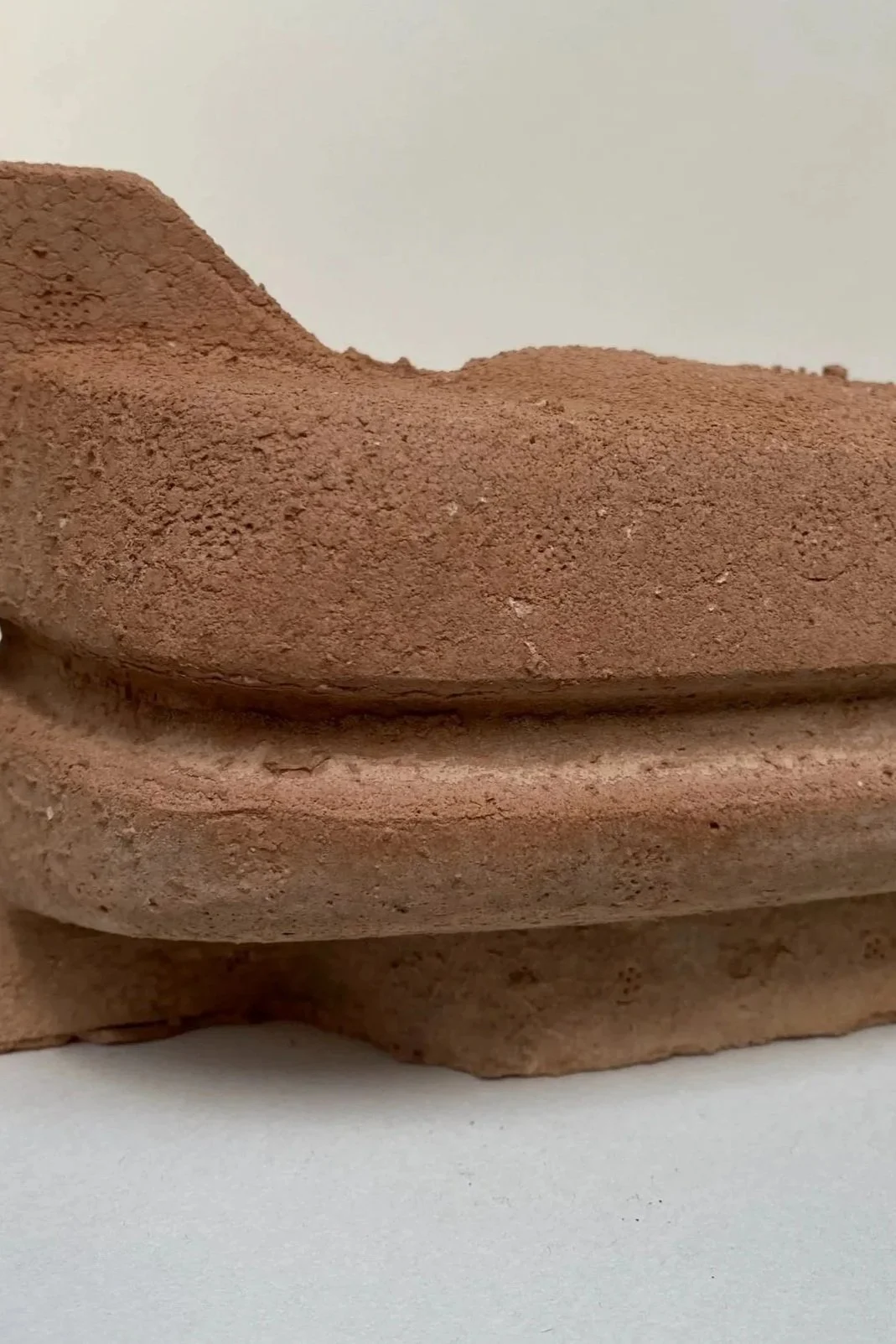
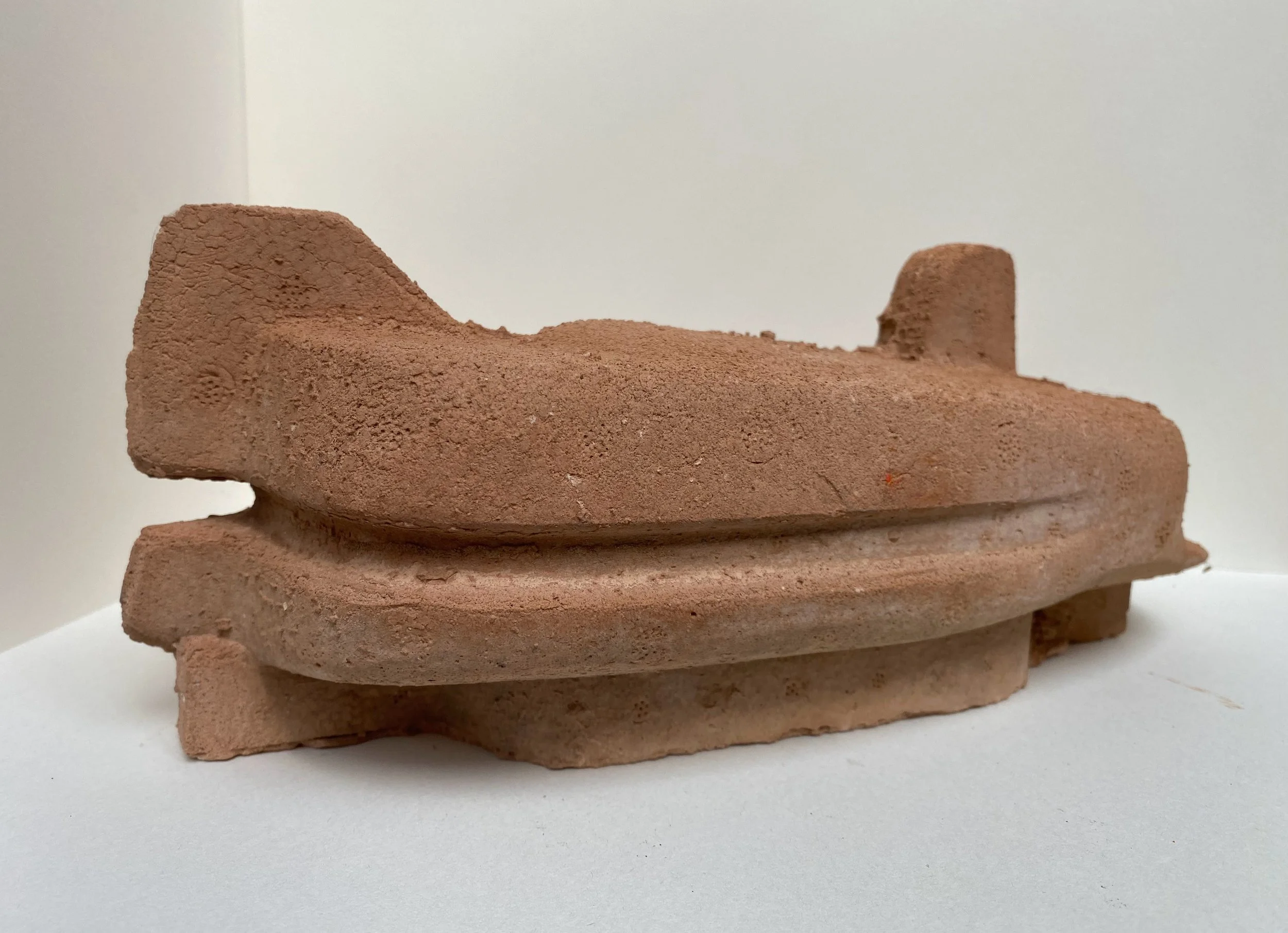
Key Defence 2015 Household wall-plaster cast from discarded keyboard packaging Discarded keyboard packaging is cast in household wall plaster, converting a protective void into a solid architectural fragment. Once designed to contain technology, the mould becomes an object suggesting fortification, machinery or an excavated structure.
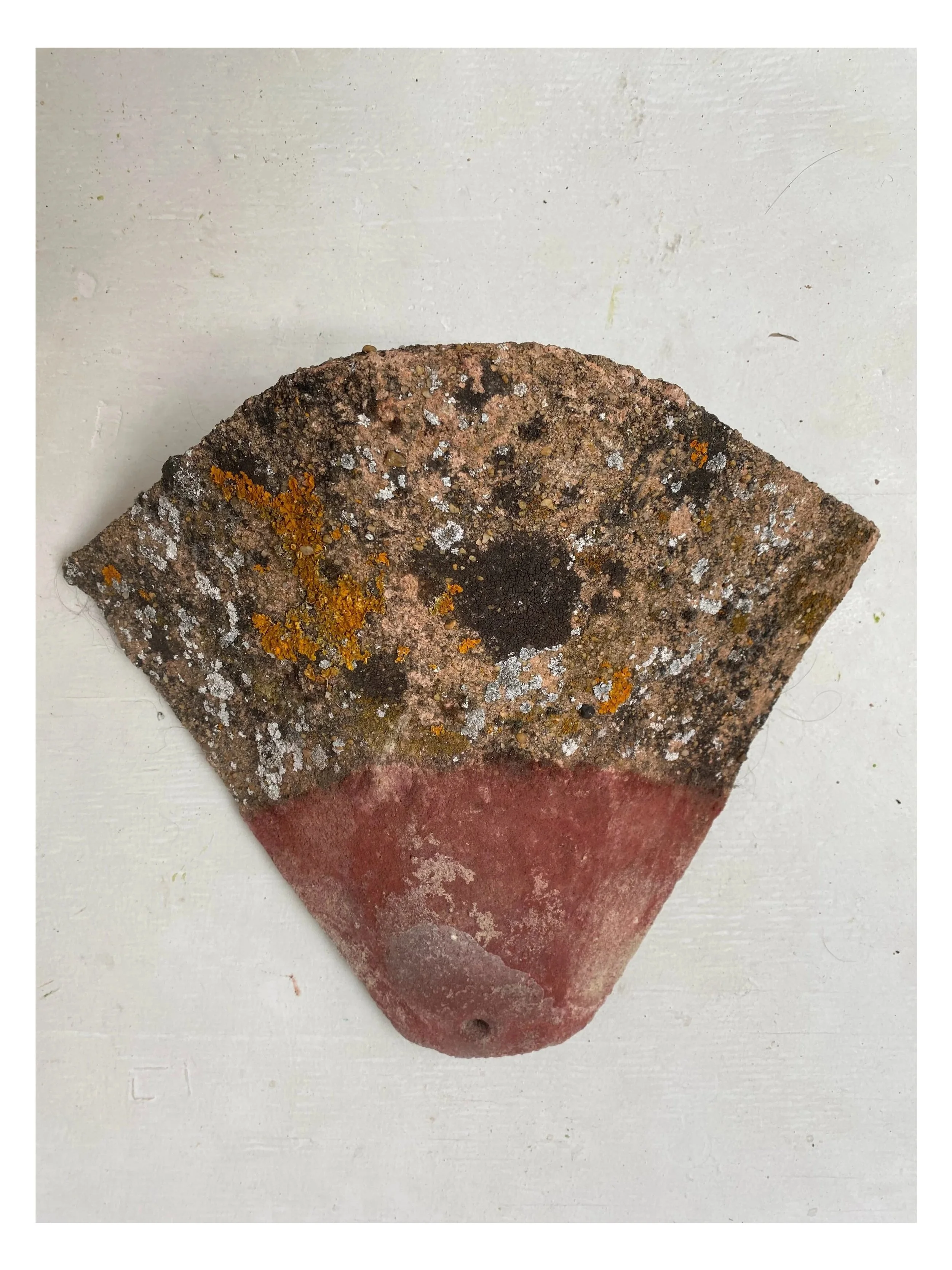
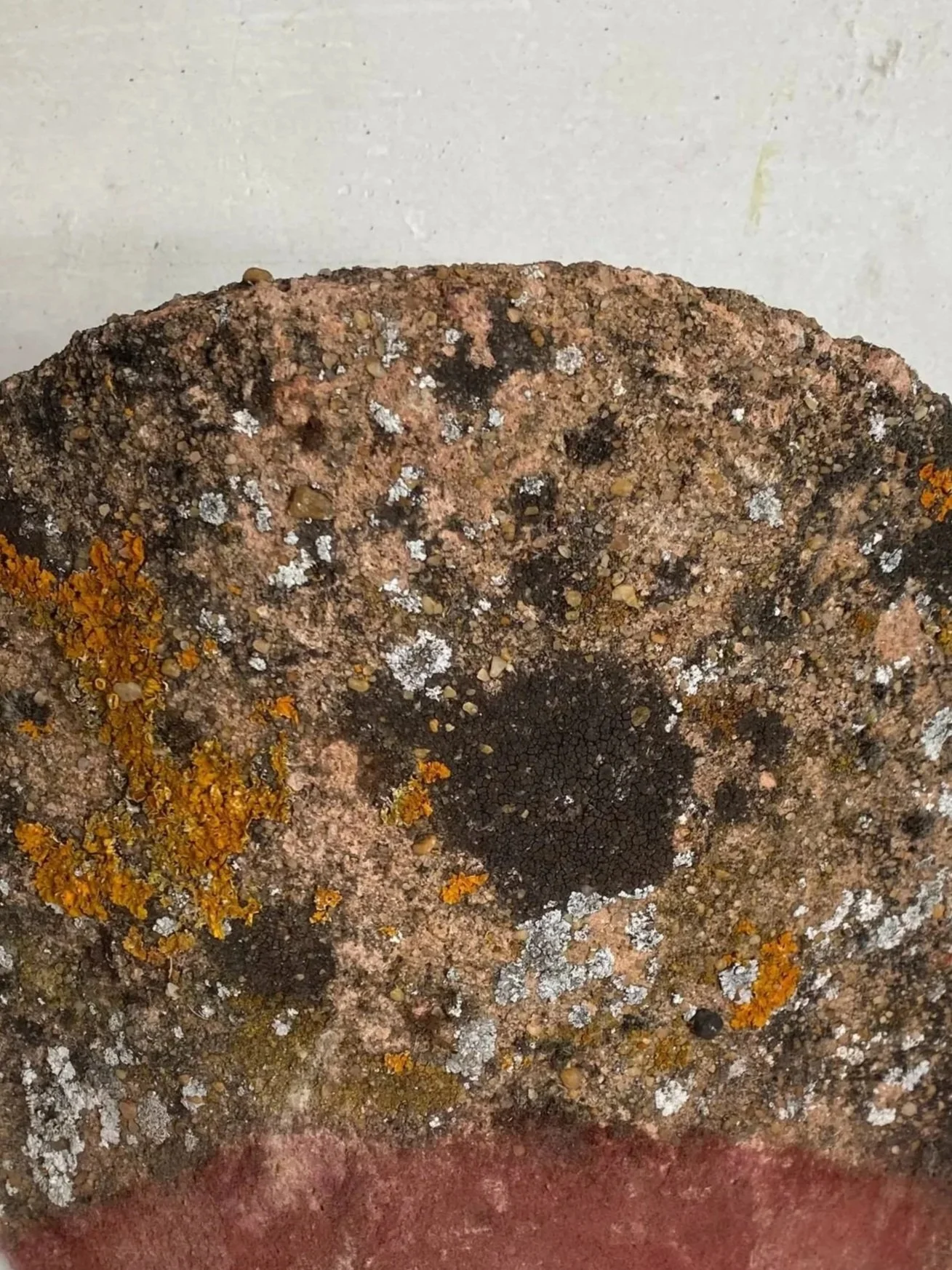
Lite Years 2026 Found lichen-covered clay corner roof tile A broken corner roof tile carries a slow accumulation of lichen across its fired-clay surface. Removed from the building it once protected, the fragment becomes a light fitting, a small habitat and material record of exposure, weather and biological occupation.
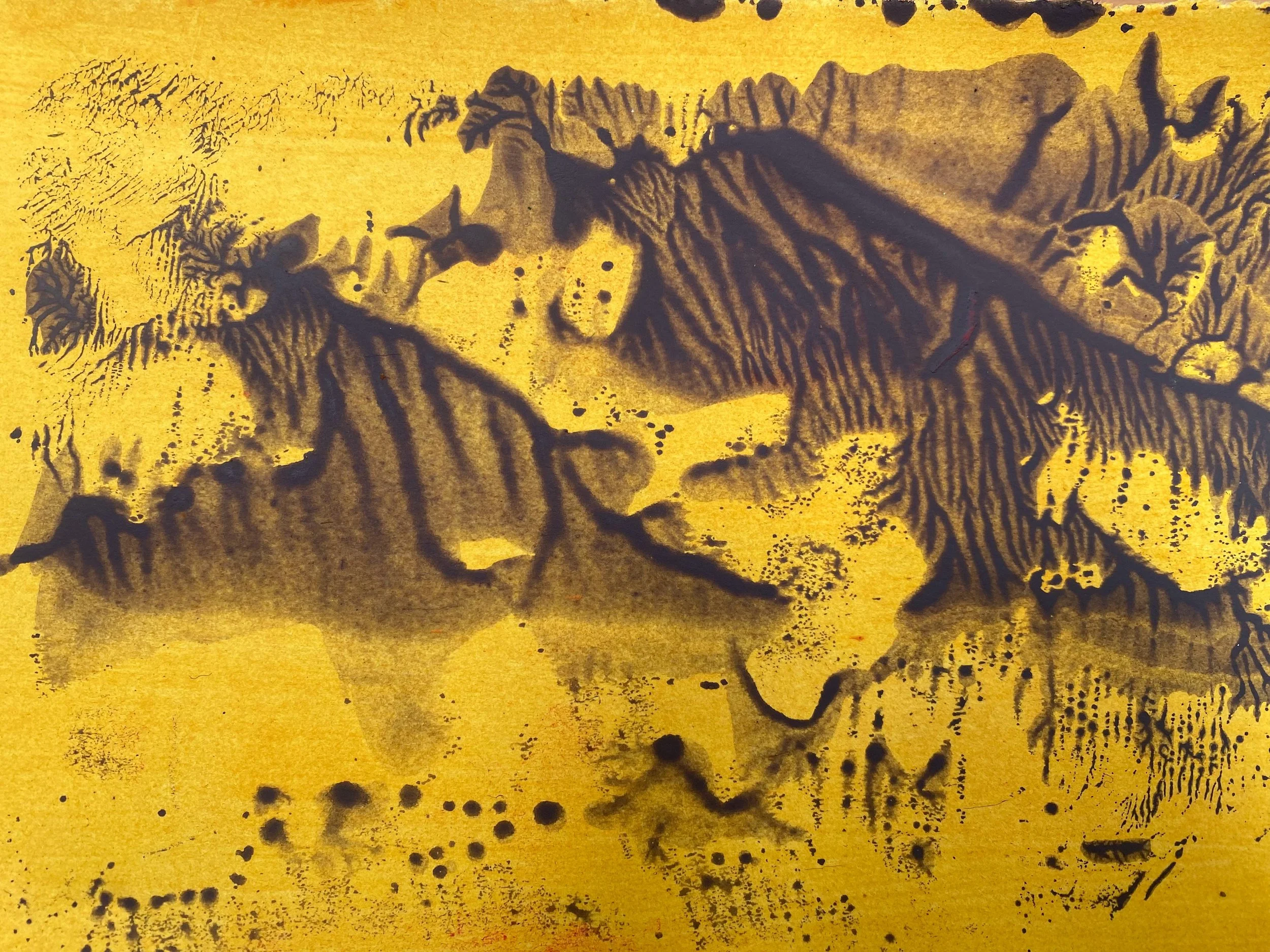
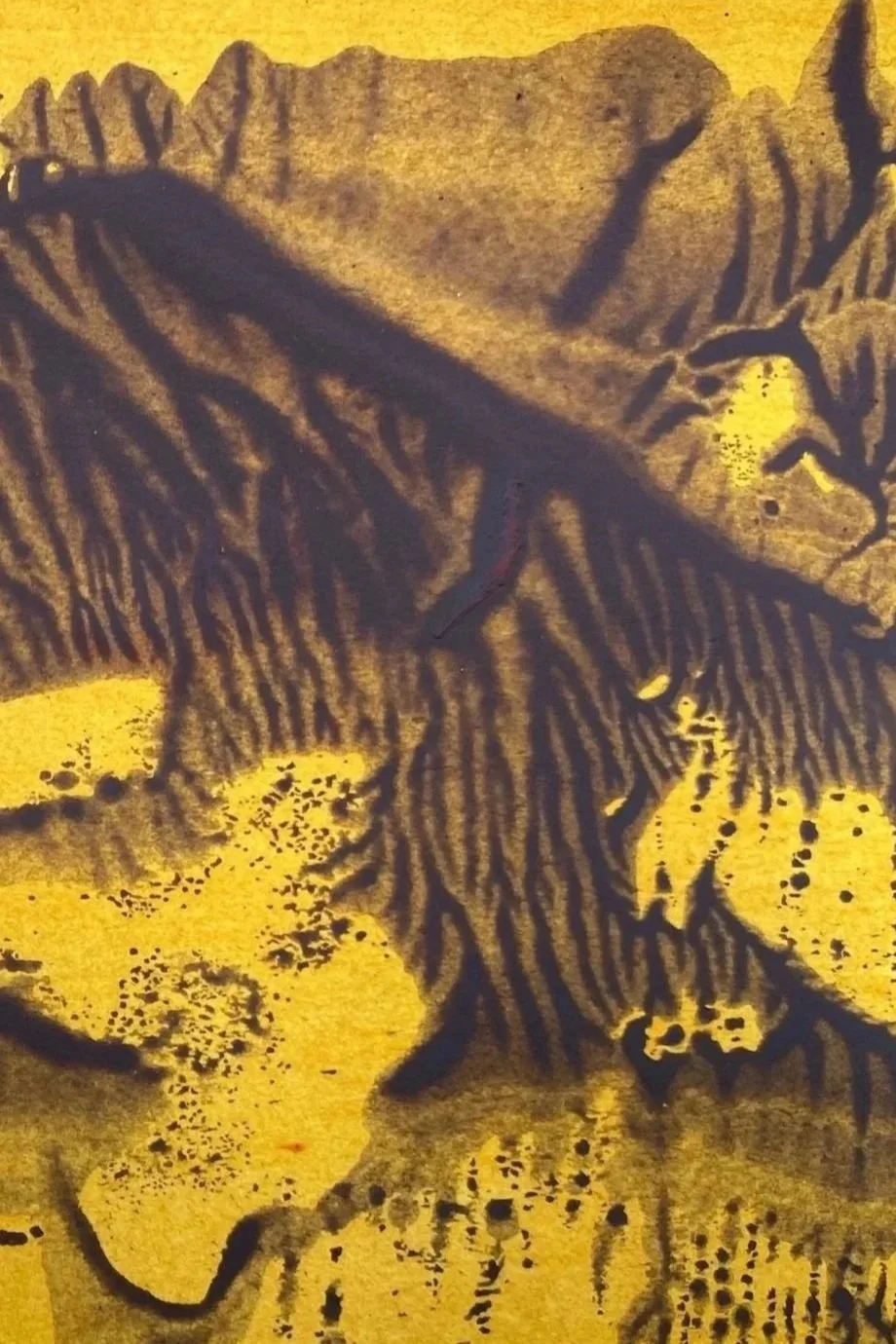
Chance Prospect 2026 Decalcomania painting on paper 15 × 21 cm Pressure and separation produce broken bands, stains and repeated ridges across the yellow paper. The fragmentary marks resemble landforms, bodies or damaged notation, inviting recognition without resolving into a fixed image.
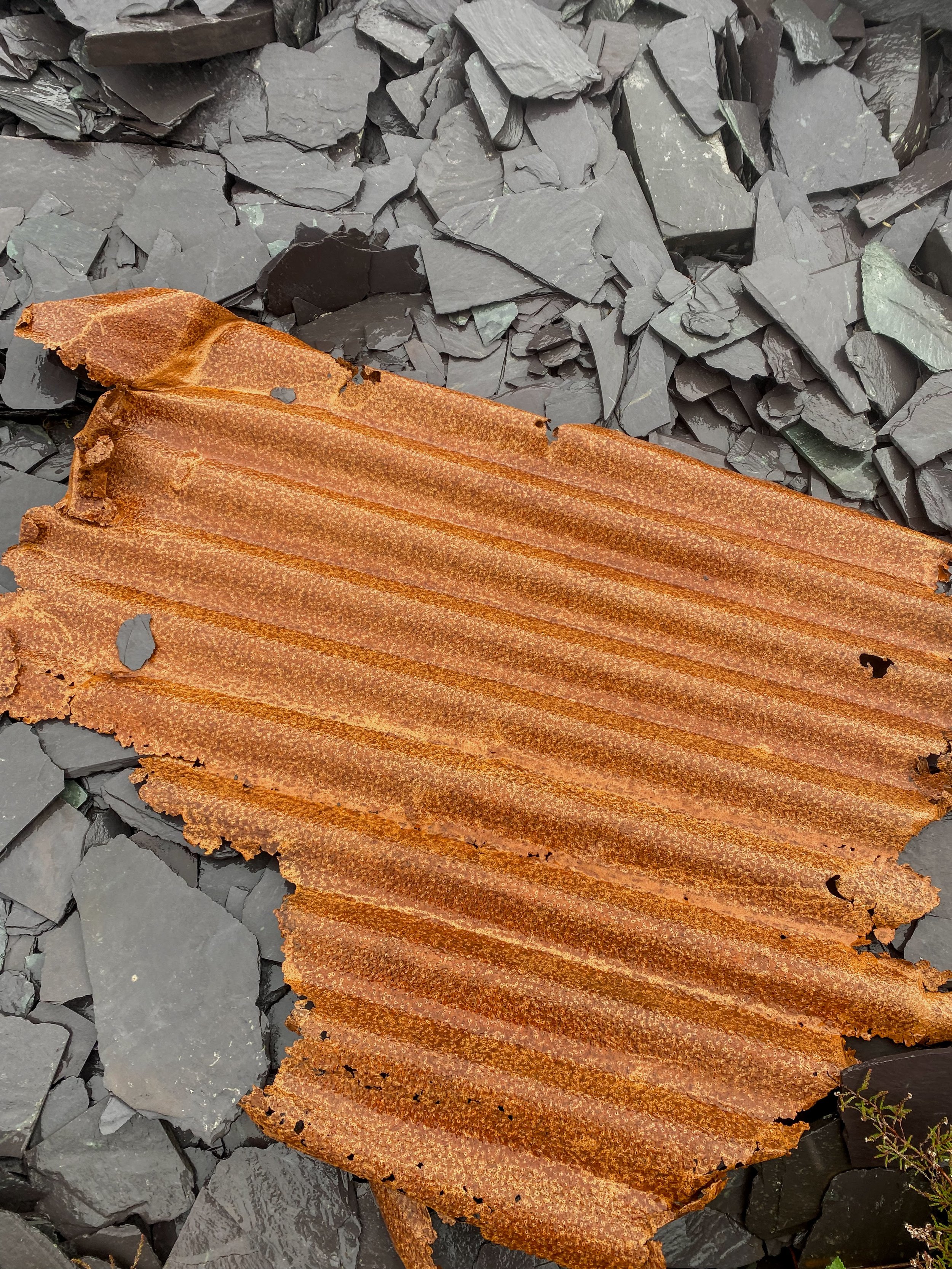
Relative Permanence 2026 Digital print 30 × 40 cm Rusted corrugated iron lies across fractured slate, bringing an industrial skin into contact with compressed geological layers. Both appear durable yet are visibly breaking down, revealing permanence as a relative condition shaped by weather, pressure and time.
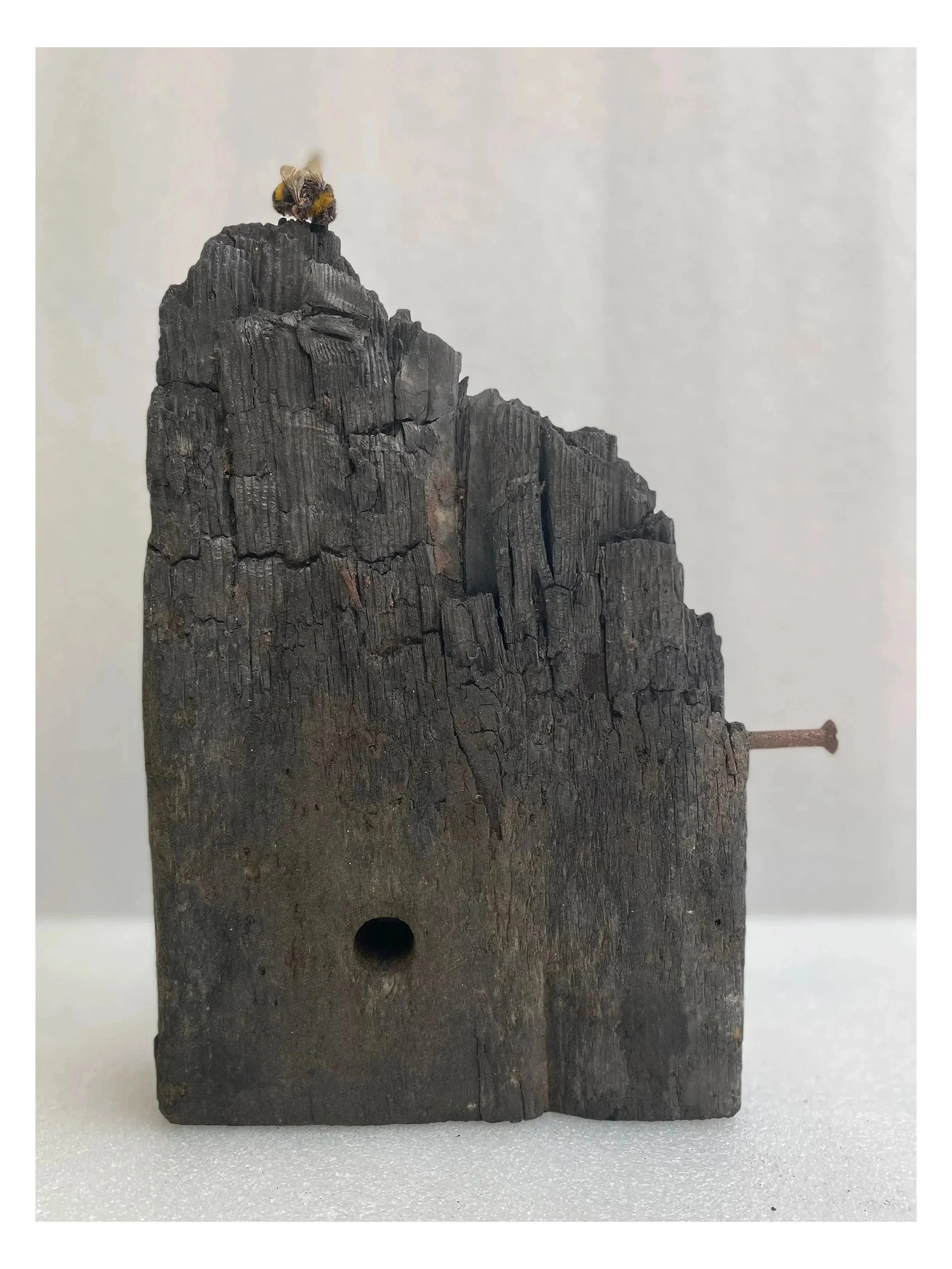
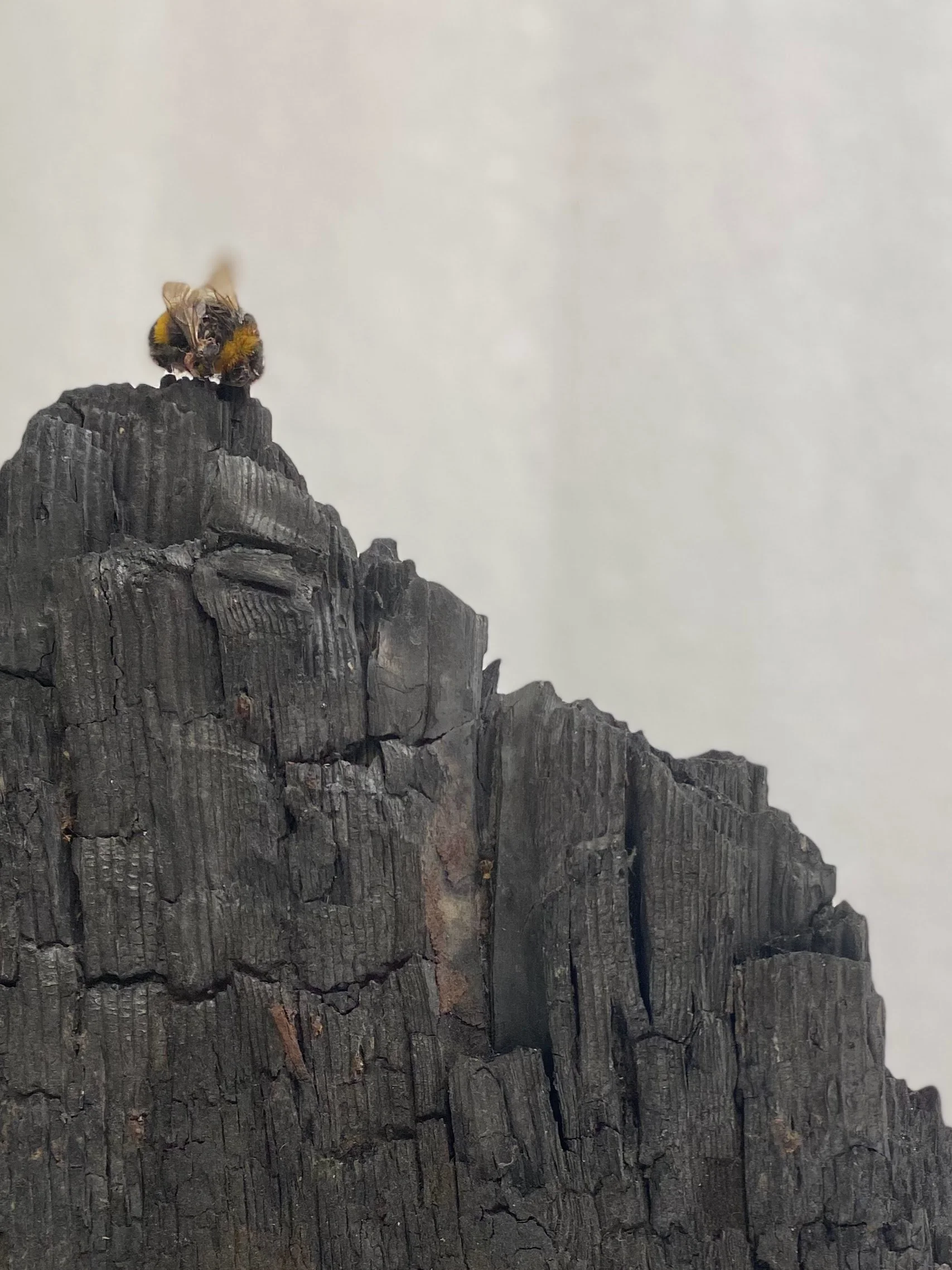
Last Flight 2026 Found bumblebee and charred wood Dimensions variable A found bumblebee rests on the broken edge of charred wood. Both retain the structures of former life after transformation or death; their encounter creates a fragile monument to destruction and what remains.